

Sunday, October 13, 2013
Pgm 12: BEFORE YOU KNIOW IT

Pgm 11: TEST

Pgm 10: WHO'S AFRAID OF VAGINA WOLF?

Pgm 9: OUT IN THE DARK

Pgm 8: QUICK LICKS (Shorts Program)

Pgm 7: THE FALLS: TESTAMENT OF LOVE

Pgm 6: I AM DIVINE

Pgm 5: MONSTER PIES


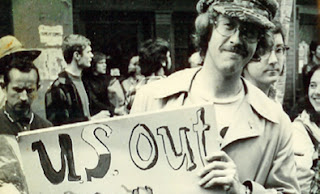
Pgm 3: SHOULDERS TO STAND ON
Pgm 2: FREE FALL

Pgm 1: REACHING FOR THE MOON

Wednesday, October 9, 2013
Director's POV: Rochester LGBT documentary Shoulders to Stand On
For more than a century, Rochester has led the nation in the historic struggle for civil rights. But, even as history is made, the record of the people and events who made it is often fragile and can be lost over time.
 Shoulders to Stand On, a full-length documentary produced by the Gay Alliance of the Genesee Valley, sets out to capture and preserve LGBT history in the Rochester region. The film tells personal stories about the achievements of Rochester’s LGBT community.
It premieres Oct. 12 at the Dryden Theatre, George Eastman House, as part of ImageOut.
Kevin Indovino is the film's director. ImageOut recently asked him to reflect on the experience.
IMAGEOUT: In an Empty Closet interview, you told Susan Jordan that one of the questions you're asking a lot of people is: as you look at the LGBT movement in Rochester, “what is it about our city that made it possible to be progressive?” Did you find the answer in the process of producing Shoulders to Stand On?
KEVIN INDOVINO: The most common answer I got from people is that Rochester has always had a spirit of social justice; most people would note that we are the city of Susan B. Anthony and Frederick Douglass.
But, in trying to go deeper than that, the one conclusion that seemed to emerge is that Rochester became a highly educated community very early on—and where you have educated, forward-thinking people, you have an environment for social change.
Industrialists like George Eastman took distinct steps to make sure Rochester was the best place for workers to live. The educational and cultural institutions he helped to put in place were intended attract the brightest and most creative people to this community.
And that way of thinking carries on even today. With the downsizing of our major industries we are again promoting our educational, technology and cultural institutions.

IO: You've also said that the people who took action in the early days didn't see themselves as “activists,” but as people who saw the need to do something. What's the difference?
KI: Good question. I guess as we look back at them now, we see them as activists and clearly someone like Bob Osborne, the founder of the Gay Liberation Front at U of R, saw himself as an activist. He was very much involved in the civil rights movements of the 1960s and brought that way of thinking to the GLF.
I think what I was really getting at in the Empty Closet interview was that these people didn’t see themselves as history makers—they weren’t thinking in terms of what kind of legacy they would be leaving behind.
 They were simply reacting to the situation at the time, seeking visibility and respect from the community.
IO: Did producing the film change the way you look at your own heritage as a member of the LGBT community? How?
KI: I think mostly I am very humbled. I don’t think any of us today realize the courage and sacrifices it took from the generation before us to get us where we are today. And how amazing it is that we are able to record and celebrate these people’s achievements while most are still alive.
It also gives me a renewed respect for the greater Rochester community. That community is often misinterpreted as being conservative, but in reality we have always been at the forefront of progressive thinking.
IO: What are the prospects for this film achieving a national and maybe worldwide audience?
KI: It’s not likely that the documentary will get much distribution beyond the Rochester region because of its very local content. Not impossible but not likely. We knew that going in. We do have several community organizations / institutions expressing interest in doing their own screenings of the documentary and that’s exactly what we were hoping would happen.
However, the documentary is really just a small part of a much larger project. It was purposely produced in a chapter-like format so that we can easily break it up into online segments.
The Shoulders to Stand On website will be redeveloped and redesigned as an educational toolkit, using the documentary segments, audio interviews and many archival materials that we found during the production of the documentary.
The online component is what will be used mostly on a national or international scale.
Shoulders to Stand On, a full-length documentary produced by the Gay Alliance of the Genesee Valley, sets out to capture and preserve LGBT history in the Rochester region. The film tells personal stories about the achievements of Rochester’s LGBT community. It premieres Oct. 12 at the Dryden Theatre, George Eastman House, as part of ImageOut.
Kevin Indovino is the film's director. ImageOut recently asked him to reflect on the experience.
IMAGEOUT: In an Empty Closet interview, you told Susan Jordan that one of the questions you're asking a lot of people is: as you look at the LGBT movement in Rochester, “what is it about our city that made it possible to be progressive?” Did you find the answer in the process of producing Shoulders to Stand On?
KEVIN INDOVINO: The most common answer I got from people is that Rochester has always had a spirit of social justice; most people would note that we are the city of Susan B. Anthony and Frederick Douglass.
But, in trying to go deeper than that, the one conclusion that seemed to emerge is that Rochester became a highly educated community very early on—and where you have educated, forward-thinking people, you have an environment for social change.
Industrialists like George Eastman took distinct steps to make sure Rochester was the best place for workers to live. The educational and cultural institutions he helped to put in place were intended attract the brightest and most creative people to this community.
And that way of thinking carries on even today. With the downsizing of our major industries we are again promoting our educational, technology and cultural institutions.
IO: You've also said that the people who took action in the early days didn't see themselves as “activists,” but as people who saw the need to do something. What's the difference?
KI: Good question. I guess as we look back at them now, we see them as activists and clearly someone like Bob Osborne, the founder of the Gay Liberation Front at U of R, saw himself as an activist. He was very much involved in the civil rights movements of the 1960s and brought that way of thinking to the GLF.
I think what I was really getting at in the Empty Closet interview was that these people didn’t see themselves as history makers—they weren’t thinking in terms of what kind of legacy they would be leaving behind.
They were simply reacting to the situation at the time, seeking visibility and respect from the community.IO: Did producing the film change the way you look at your own heritage as a member of the LGBT community? How?
KI: I think mostly I am very humbled. I don’t think any of us today realize the courage and sacrifices it took from the generation before us to get us where we are today. And how amazing it is that we are able to record and celebrate these people’s achievements while most are still alive.
It also gives me a renewed respect for the greater Rochester community. That community is often misinterpreted as being conservative, but in reality we have always been at the forefront of progressive thinking.
IO: What are the prospects for this film achieving a national and maybe worldwide audience?
KI: It’s not likely that the documentary will get much distribution beyond the Rochester region because of its very local content. Not impossible but not likely. We knew that going in. We do have several community organizations / institutions expressing interest in doing their own screenings of the documentary and that’s exactly what we were hoping would happen.
However, the documentary is really just a small part of a much larger project. It was purposely produced in a chapter-like format so that we can easily break it up into online segments.
The Shoulders to Stand On website will be redeveloped and redesigned as an educational toolkit, using the documentary segments, audio interviews and many archival materials that we found during the production of the documentary.
The online component is what will be used mostly on a national or international scale.
Friday, October 4, 2013
Image Art opening reception: i do?!
via Alice Carver-Kubik, ImageArt Co-Chair
ImageArt opening reception this evening (Oct 4) from 6-9 pm


i do?! addresses the diversity and weight behind the word “marriage” from multiple points of view. Traditional media like watercolor, acrylic paint and photography join forces with sculptural works, digital printing and some not-so traditional media to tell a variety of stories. Some works address the feeling of incompleteness or invisibleness that is sometimes felt by those in same-sex unions not backed by the law or accepted by society. Several pieces have been inspired by traditional marriage related phrases, such as a couple working through rough times or how one might disparagingly refer to a spouse.
Other works stir stereotypes, gender and ethnicity into the marriage pot (or is that bed?). Overall, the artists selected by the ImageArt jury address a range of topics including love, commitment, gender roles, family and stereotypes.

The show opens today (October 4) with a reception from 6 to 9 pm. at the Visual Studies Workshop, 31 Prince Street, Rochester, NY. The exhibition and opening reception are free and open to the public. There will be wedding cake!

The exhibition and opening reception are free and open to the public. The exhibition will run from October 4 to October 26. Gallery Hours are Tuesday through Saturday 10:00 am to 4:00 pm, Sundays October 6 and 13, 11 am to 5 pm.
ImageArt opening reception this evening (Oct 4) from 6-9 pm


Images via Jeffrey Cougler, ImageArt Co-Chair
Inspired by the growing momentum of marriage equality activism, in its fourteenth year, ImageArt decided to create a themed, juried exhibition that addresses the issues surrounding marriage from multiple points of view.

i do?! addresses the diversity and weight behind the word “marriage” from multiple points of view. Traditional media like watercolor, acrylic paint and photography join forces with sculptural works, digital printing and some not-so traditional media to tell a variety of stories. Some works address the feeling of incompleteness or invisibleness that is sometimes felt by those in same-sex unions not backed by the law or accepted by society. Several pieces have been inspired by traditional marriage related phrases, such as a couple working through rough times or how one might disparagingly refer to a spouse.
Other works stir stereotypes, gender and ethnicity into the marriage pot (or is that bed?). Overall, the artists selected by the ImageArt jury address a range of topics including love, commitment, gender roles, family and stereotypes.


Thursday, October 3, 2013
A salute to all the shoulders that have lifted us
via Jonathan Everitt
From Frederick Douglass to Susan B. Anthony, Rochester has a long, proud history as home to leaders in the struggle for civil rights.
As ImageOut turns 21 this year, we're reminded what it means to come of age. To recognize the trailblazers. To honor the courageous, even outrageous people who made it possible for us to live out in the open with dignity.
So, ImageOut 21 is a perfect moment for us all to reflect. It's also a perfect year for a whole host of films that will deeply connect us with our historical narrative.
Shoulders to Stand On - A history of Rochester's own LGBT movement
First and foremost, the premiere of “Shoulders to Stand On,” a documentary of Rochester's own history and key figures in the LGBT rights movement. Plus “Portrait of Jason,” a groundbreaking 1967 documentary about a gay man—unheard of material for film at the time. And then there's “I am Divine,” the story of one of the most notorious drag queens in history, who rose to fame as the campy star of John Waters' cult classics.

Portrait of Jason
The world has changed in the past 21 years. Equality is becoming a reality for the first time in our history. As we mark ImageOut's 21st birthday, we're proud to stand on the shoulders of such a powerful cast of ancestors—both locally and globally. We owe them our gratitude. And our applause.
If you didn't get your tickets yet, don't wait. They're going fast. Two films have already sold out. Save your spot today.
- Before You Know It (Directed by PJ Raval, 2013, USA)
- The Rugby Player (Directed by Scott Gracheff, 2013, USA)
- Soongava: Dance of the Orchids (Directed by Subama THAPA, 2012, Nepal)
- The Last Match (Directed by Antonio Hens, 2013, Cuba)
Wednesday, December 12, 2012
John Waters Live and In-Person This Sunday!

It's the perfect way to kick off your yuletide festivities in filthy, fabulous style!
Monday, October 15, 2012
Program 40: Elliot Loves

Closing out our big 20th Anniversary Festival in classic style, Elliot Loves is a silly, yet touching, romantic comedy about finding that special someone to fill those gaps life leaves behind.
Program 39: My Best Day

This quirky and hilarious underdog of a film, about the importance of family, in whatever form it takes, deserves a huge Rochester audience.
Sunday, October 14, 2012
Program 38: Time to Spare (Alle Tijd)

Time to Spare is often funny, often heartwarming, and very touching, as it explores the bonds that hold the family, siblings in particular, together even in the face of great adversity.
Program 37: Turtle Hill, Brooklyn

Turtle Hill, Brooklyn tells a relatable story that will feel familiar to anyone who's been in a long-term relationship, facing the difficult transition from simply dating into a potential lifelong commitment. The film's director, Ryan Gielen will be in attendance.
Subscribe to:
Posts (Atom)

 Posts
Posts

